



If you are a teenager or a young adult, how much money do you spend on social activities with your friends? Probably a lot. Recently, one of my friends observed that as you grow up, more of your gatherings center around food. Frequently eating out at restaurants and ice cream parlors can be expensive. What if I told you there was an organized way that you could hang out without the added cost and with all the fun?
The answer is libraries. You may immediately think this is a bad idea if reading is not your strong suit. However, many programs provided by libraries have nothing to do with reading whatsoever—programs that are sometimes specifically geared toward Gen Z. The engagement of teenagers and young adults in their local library falls below that of other age groups, and here is what the Ashland Library and some students from Randolph-Macon College have to say about it.
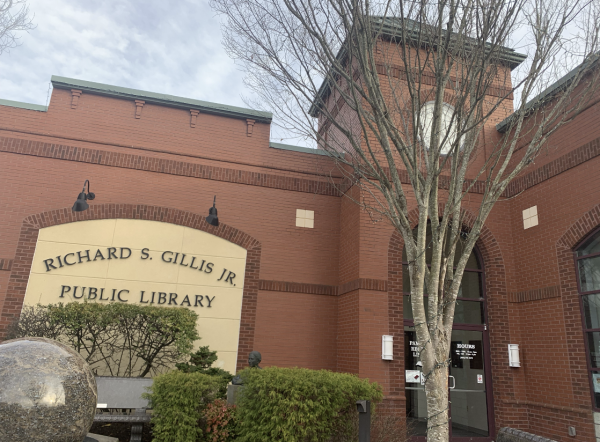
Awnali Mills, Branch Manager of the Ashland Library, commented on the library as a third place. She explained, “Here, the library is commonly known as the third space for people. There’s work, and there’s home, and there’s the library. We’re like the community’s living room. So you can come here, and you can interact with people, and you can browse, you can sit, and nobody will bother you.”
The library is known as a sacred space for many, but Mills pointed out that “Teens are our lowest attenders for programming. They are very heavily scheduled. It can be anywhere from nobody shows up to 10-15 people show up.” She mentioned that children’s events usually have the highest number of participants.
Students from RMC admitted that their participation in library programs has decreased over time, having dedicated more time to library activities when they were younger. RMC student Maddie Cross ‘29 participated in craft activities, reading challenges, and puzzle exchanges at her home library in Richmond in middle school but not high school. Mary Kathryn Topping ‘27 also commented on this trend. “I haven’t attended any programs at my local library as a teen. As a child, I did attend programs [such as] reading programs,” she said.
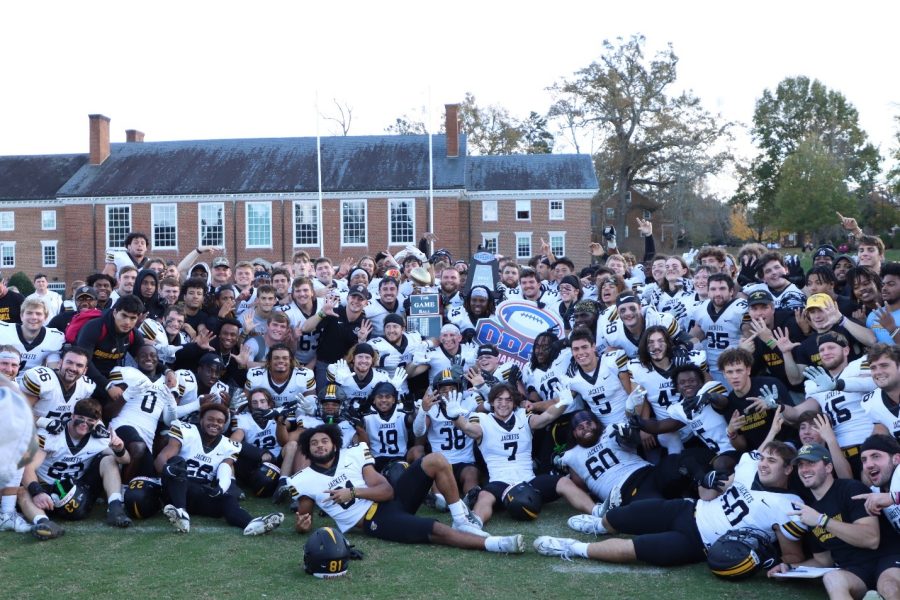
Although members of Gen Z may not be the number one demographic attending library programs, Mills told stories about Randolph-Macon students who are active at the Ashland Library.
“We see a lot of folks from Randolph-Macon that come in and use this as a study space. I tell them it’s a really good place to get away from your roommates,” Mills added. She laughed and said students come in and say, “We need a library card, right now! We had no idea you had all this stuff!” Mills told another story about a student that came in that day. “One of her college friends brought her in to get a card. She said, ‘Mmm, I told her. I got my card; she needs her card.’ So we got her a card.”
Multiple RMC students who were interviewed and have not attended programs recently expressed interest in going to events at the Ashland Library. Alex Kirkland ‘28 remarked that “Going to these events … would be a great way to learn and connect.” Both Cross and Topping agreed, saying they would love to get involved in the library in Ashland.
For young people looking to get involved in the Ashland Library, there are a lot of opportunities. Programs for Gen Z are split into teens and adults, the adults’ program being for all individuals ages 18 and older.
Programs for teens include the Teen Advisory Board, where teens give the library feedback but also play games and have pizza, getting volunteer credit in the process. There are many other opportunities for individuals in this age group to get involved. Mills said, “Every month we have a program for teens, and it can be a craft or a speaker who comes in or something like that.”
For adult programs, there is no differentiation between the younger and older adults. However, bringing together people from different stages of life can foster connections between people with diverse perspectives. RMC student Kirkland commented on the benefits of different points of view and appreciates the library as a space for that.
A recent adult program sponsored by the Ashland Library was Entrepreneur Boot Camp, which taught people how to start their own businesses. Mills pointed out that the ages of the participants vary, as they had some older adults but also people in their twenties.
Mills also explained the Ashland Reads program they are currently running. She said, “[It] is a collaboration book club between the Ashland Library and the Randolph-Macon Library … They don’t need to read a specific book, just [one] on [a specific] theme.” This program alternates between the two libraries. Ashland Reads shows how engaged the library is in the community, even with libraries outside their own doors. The Ashland Library not only cares deeply about teenagers and young adults, but they collaborate with RMC, which is a central part of Ashland and consists of many young people.
Many teens and people in their twenties are missing everything the library has to offer. When asked what she wished more young people knew about the Ashland Library’s programs, Mills answered with “That they’re a lot of fun! I think there can be a misconception that the library is just books, and we are so, so much more than books.” With a variety of events, the library is likely to have something suited for every individual. The library publicizes their events on their website and on Facebook.
Attending events at the Ashland Library is different from other ways members of Gen Z can spend their time. Mills noted that “This doesn’t cost them anything, and there is no expectation that they will buy anything. We are not commercial; we’re not marketing anything to them.”
The Ashland Library has multitudes of ways to learn, build community, participate in programs, and utilize resources. People can come to use the space as an option other than work and home; it really is a third place. Mills said, “Coming into the library, we’re friendly, we’re glad you’re here, we’re excited that you’re here, and your taxes are paying for it, so you might as well use it.”