




Randolph-Macon: A Tradition of Southern Ivy Style
Carter S. Cook
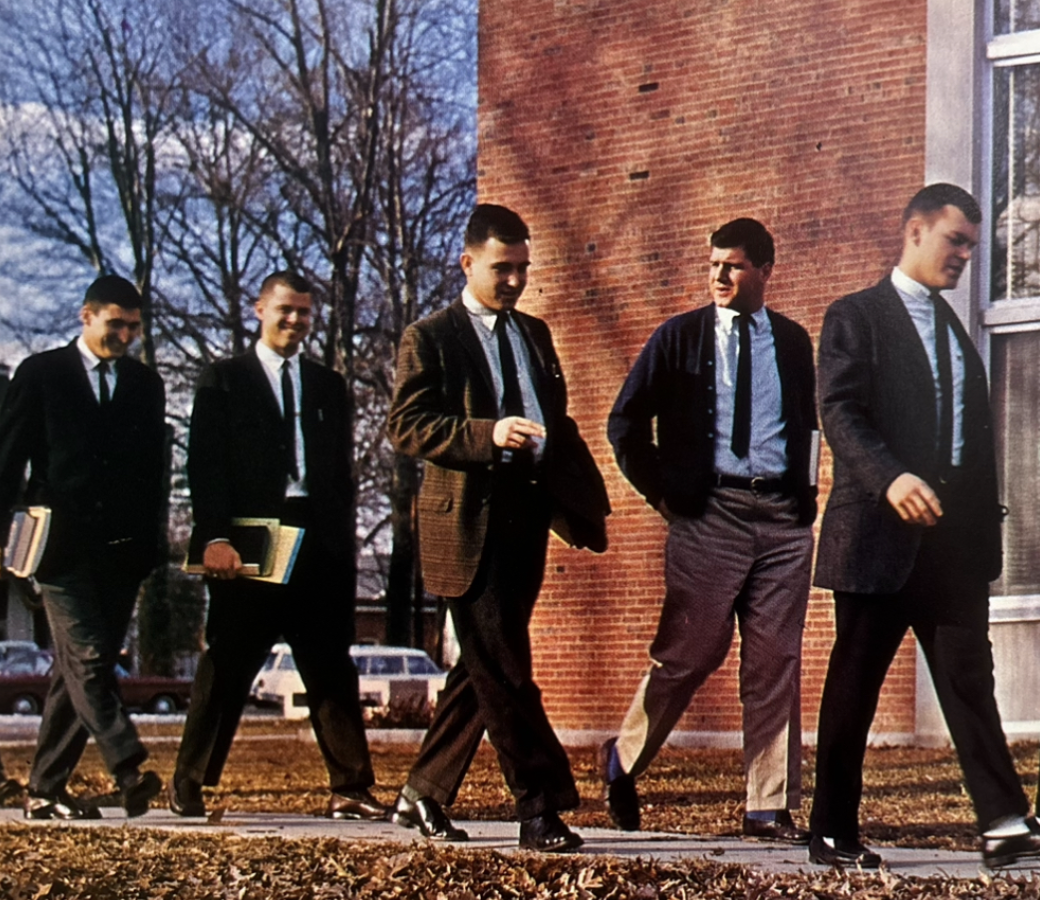
When walking the storied campus of Randolph-Macon College, you are met with an array of formidable buildings and impressive designs. However, it is evident that the appearance of the student body does not match the campus’s elegant appeal. In short, there’s a lot of sweat clothing, with some students going so far as to sometimes wear pajamas. The mass migration of students to and fro the new campus more closely resembles Gold’s Gym than a college. Every once in a while you may find the occasional pair of khakis or jeans, but they are vastly outnumbered by pairs of sweatpants and gym shorts.
Needless to say, this sea of sweats has the Brooks Brothers rolling over in their graves. At one time, though, our campus was a muck of ivy style. The look is quite polished, and its popularity continues to today (unfortunately, not here) with few alterations. As for the original wave of Ivy style in the 1950s and 60s, James H. Grant, a frequent contributor to IvyStyle.com, offered the following in regard to its longevity: “…these guidelines had a very limited shelf life. The southern collegiate style essentially coincided with the decade of the 1960s and declined in popularity during what became known as the “Vietnam Era.” Nevertheless, it would be my guess that these simple rules are as relevant to the traditional mode of dress today as they were sixty years ago.” Perhaps modern yellow-jackets will embrace this and stop showing up to class in pajamas, but one can only hope.
History of the Look
Ivy style was born out of America’s Ivy League college campuses in the 1920s or 30s. This date of origin is somewhat subjective, but the articles of clothing and color schemes that would become most tied to the movement became popular in this timeframe. This style, if it can be summed up broadly, consists of a polished look taking elements from traditional American tailoring, the idea of comfortable elegance, and the collegiate environment of the early to mid-1900s. Its name comes from the Ivy that covers the “Ivy League” campuses from which the look originated.
Ivy at R-MC
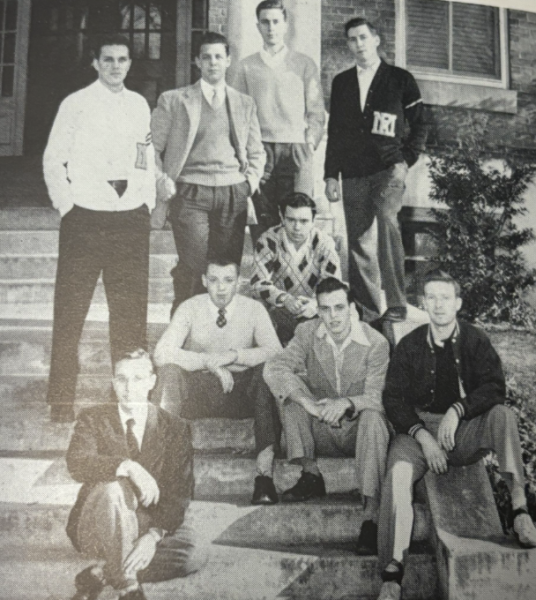
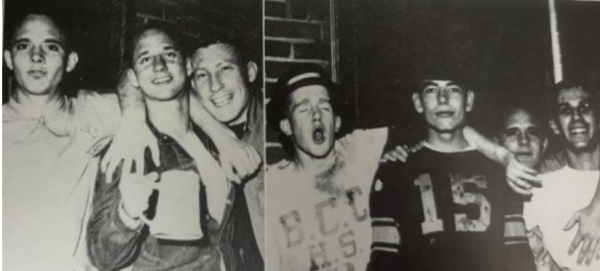
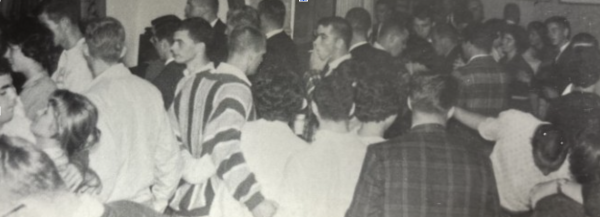
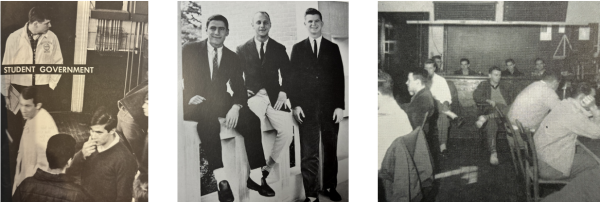
Randolph-Macon’s positioning in the Southern United States, in particular rural Virginia, as well as its status as a private Methodist-affiliated college, made it a perfect breeding ground for the Ivy league look. From the late 1940s until the late 1960s – with the developed look being most popular in the 1950s and 60s – this was the predominant style beneath our oaks and maples. Midcentury life was much more formal, as was the collegiate world as a whole; for instance, chapel attendance was mandatory. Traditions such as this helped to perpetuate a formal atmosphere where people dressed accordingly. Even when given the opportunity to relax their mode of dress, this was the look of the time, and most young people dressed in some semblance of this style, whether consciously or not, both inside and outside of school. While it is very much true that women dressed in the Ivy style, at RMC it has historically been most closely associated with men. This is due to the fact that Randolph-Macon was generally speaking a male-only institution until 1971.
Ivy or Southern Collegiate?
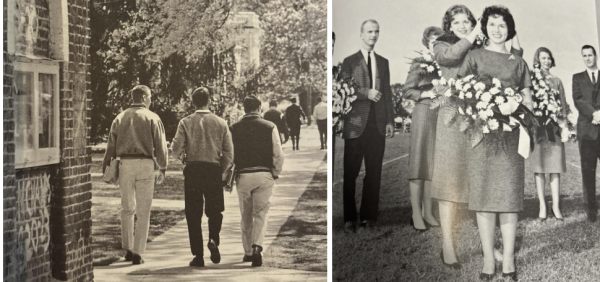
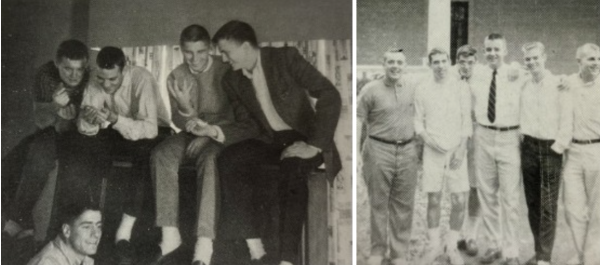
There is some debate on whether to refer to this mode of dress as Ivy or Southern Collegiate. Grant recalls that, “The distinction between the mode of dress known as Ivy League and the Southern Collegiate Style – if one actually exists – is somewhat murky. When I was in college in the mid-1960s, we referred to our style as Southern Collegiate, but we sometimes called it Ivy League, or simply collegiate, or just plain traditional, but never “trad” and certainly never “preppy.”
The Proper Regalia
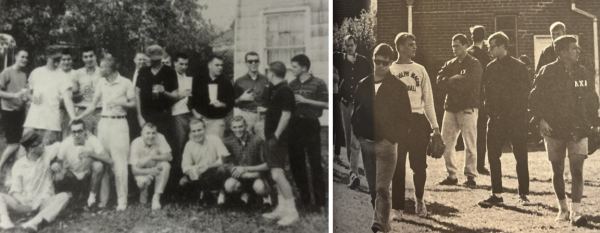
There are a few articles of clothing that are most essential to the movement, and the key here is an au naturel look. In other words, a blazer isn’t to be worn like it’s Easter Sunday; you wear it like it’s another lazy Saturday meeting Muffy at the club for Bloody Marys. The clothes shouldn’t look too polished, which is aided by the fact that cotton and other natural fabrics popular to the movement wrinkle easily. The mainstays were penny loafers (typically Bass Weejuns) or canvas sneakers (Jack Purcells, P.F. Flyers, etc.), unstarched Oxford collar button-down shirts (Gant or Brooks Brothers), knit or repp stripe ties, wool sweaters (J. Press), letterman jackets (sometimes letters were worn on boatneck pullovers and cardigans as well), sack jackets with a 3/2 roll, harrington windbreakers, madras patterns, and khaki chinos (preferably with a 1 ¾ inch cuff and no break). While these items may seem more male-centric, they can be and were worn by women. There is some debate among Ivy aficionados on if loafers should be worn with socks, though period photos of RMC students show a preference towards pairing them with white socks.
Midcentury Recollections
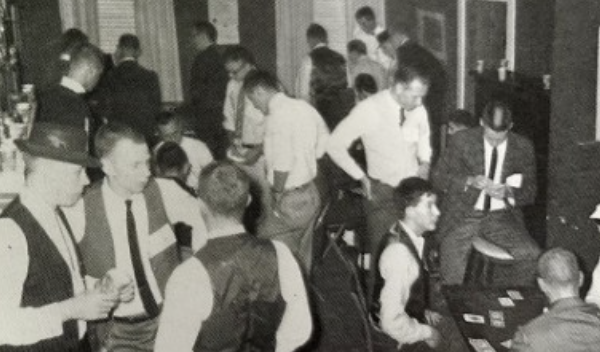
To best understand the look of a time and place, perhaps the most valuable information is the recollections of those who were there. Bert Sikkelee, a 1959 graduate of the college, offered the following:
“Back in the late 50s, we all wore white socks. Most of us wore khakis, not the pants now with all the pockets in them, just standard pants, but they were all khakis. And then, to dress up, we’d just put on a sport coat. We did not have to wear ties to class, and nobody wore ties to class. Obviously, for a special occasion, we could wear ties, but we didn’t wear them much.”
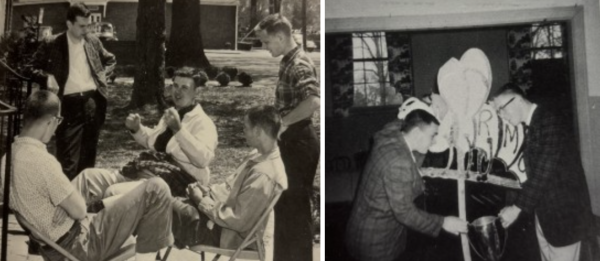
Parker Dillard, a 1962 graduate of the college, offered the following regarding the period and its style.
“If you look at an annual from those days, I think you’ll find that the guys had on coats and ties. I remember guys at W&L (Washington & Lee) had to wear a tie to class. We didn’t have to do that; it was optional. I guess some guys wore a tie to class. Most of us just wore casual clothes, like a v-neck sweater or some other kind of shirt. (The dress at fraternity parties) was informal; I think mostly it was casual. We didn’t look too sloppy. Most guys dressed presentable. The professors wore a tie. They came to class with a coat and tie and would take the coat off and drape it over the back of the chair.”
A Time of Change
By the late 1960s, the look had started to change and, in some cases, fade out entirely. Society had begun to de-formalize, encouraged in part by the burgeoning “hippie” movement. Suddenly, the clean-cut look of the past twenty years was not cool. Southern Virginia, however, was unconcerned with the styles of the Californian set, and continued to dress within newly expanded Ivy confines, though these continued to relax and change. The ties and lapels became wider, the pants slowly gained a slight bell, and the khakis were replaced by jeans. By the mid 1970s, the look was somewhat dead in the water. Not only did hair become longer and the style become much less refined, but RMC also faced the change of coeducation. No longer was the sport coat the de facto dress uniform of Randolph-Macon, nor could it be.
A Return to Form
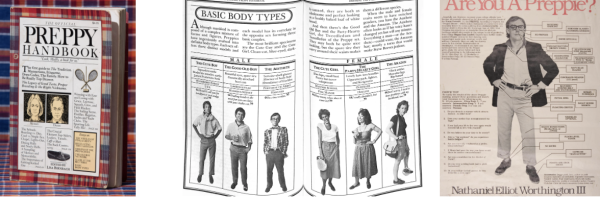
By the early 1980s, The Official Preppy Handbook and the return to form that followed had swept America, in particular, the Southern states. Randolph-Macon once again became awash with the polished Ivy style, though now in an altered iteration dubbed “Prep,” or preppie style. While the old mainstays of OCBDs and khakis were worn once again, new pieces were integrated. Popular items included Levi 501s, knit belts/watchbands, Sperry boatshoes, “go-to-hell” trousers, and, of course, Lacoste polos.
80s Recollections
Rhonda Toussaint, a 1985 graduate of the college and our Executive Director of Alumni Relations, offered the following regarding RMC style in the 80s, which has been divided into different topics.
On Tailgate Style:
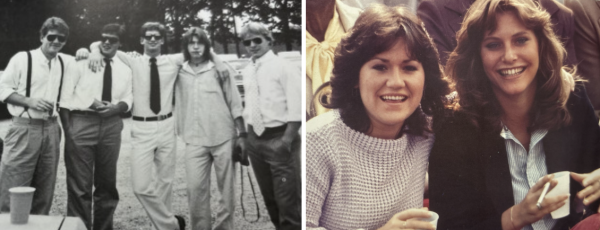
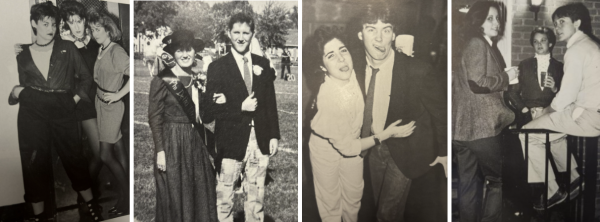
“I know a lot of the students dress up now, much more like cocktail attire sometimes. Now they’re in fancy dresses and short dresses, but the style then was wool plaid skirts that came below the knee, sweaters, and frilly blouses. That’s what all the girls were wearing to the football games. Sometimes the guys wore ties at tailgates. It was not uncommon for them to wear khaki shorts, a button-down, a tie, Sperrys with no socks (of course), a ball cap, and Ray-Bans. For a while, it was fashionable for guys to have their boxers hanging out below the hem of their shorts.”
On College Formality:
“The vibe of the college was definitely more formal than it is now. Dressing down for class was wearing jeans or shorts. The girls wore lots of dresses, and the guys often had on button-downs, Izods, or rugby shirts. Rugby shirts were really popular along with loafers and duck boots. There were a lot of duck boots on campus. When I was here, the town had a real problem with streets flooding, and the campus flooded all the time, so you almost had to have some kind of rain shoes. I would say the faculty were more formal as well. The men faculty would often have on a blazer. Some would wear a tie every day, older ones especially. They would wear a tie and jacket. Have you seen the Preppy Handbook? There were definitely people who dressed like that, a lot of people. But there were also people, especially for parties, who would go more in the Madonna or Cyndi Lauper kind of style. You know, heels with ankle socks, and short skirts, and of course big hair, really big hair.”
On Quintessential Items:
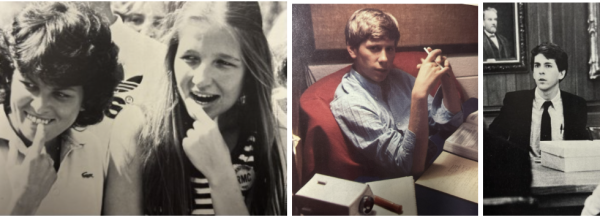
“For men, probably the quintessential thing was the Izod polo, oftentimes with the collar popped up. Women wore Izods, too, but it wasn’t as much of a thing. Corduroys were big for guys and girls. I feel like I wore corduroys more often than jeans. We had wide and skinny whale cords. Sweaters and pearls were popular and very preppy. Just like today, there was variety on campus. Not everybody dressed the same, but those were the popular fashions of the day.”
On the Preppiest Groups:
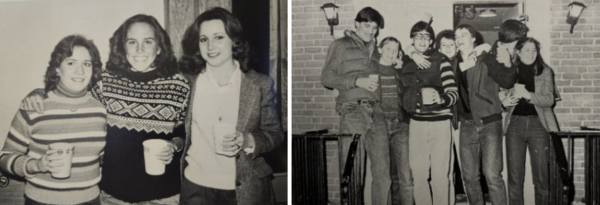
“The KA’s were extremely preppy. The Phi Mu’s were also very preppy. Lots of sweaters and pearls. Kappa Sig’s were football players when I was here, so they were the ones more likely to wear sweatpants, probably.
Modern Times
The preppy wave of the 80s would continue in different ways throughout the 90s and 2000s and into the present day, though it would slowly take the backseat among younger generations in favor of more relaxed “athleisure.” The original Ivy look has had a resurgence as of late, due in part to various period piece television programs and the rediscovery of heritage clothing brands by young adults. However, this style of dress has never gone fully out of style, and many of the pieces remain as stylish as ever. OCBDs, loafers, and khakis are once again popular among the college set, especially in the South and at tailgates or Greek events. RMC is not exempt from this, with football tailgates and Greek mixers existing as one of the few settings where students dress up. Perhaps as a new generation dresses for college and recognizes the merits of good style, the Ivy look will once again be seen at Randolph-Macon.
A special thanks to Bert Sikkelee ‘59, Parker Dillard ‘62, Rhonda Toussaint ‘85 and Barclay DuPriest for the invaluable information and interviews, and to Unity Bowling for archive access.
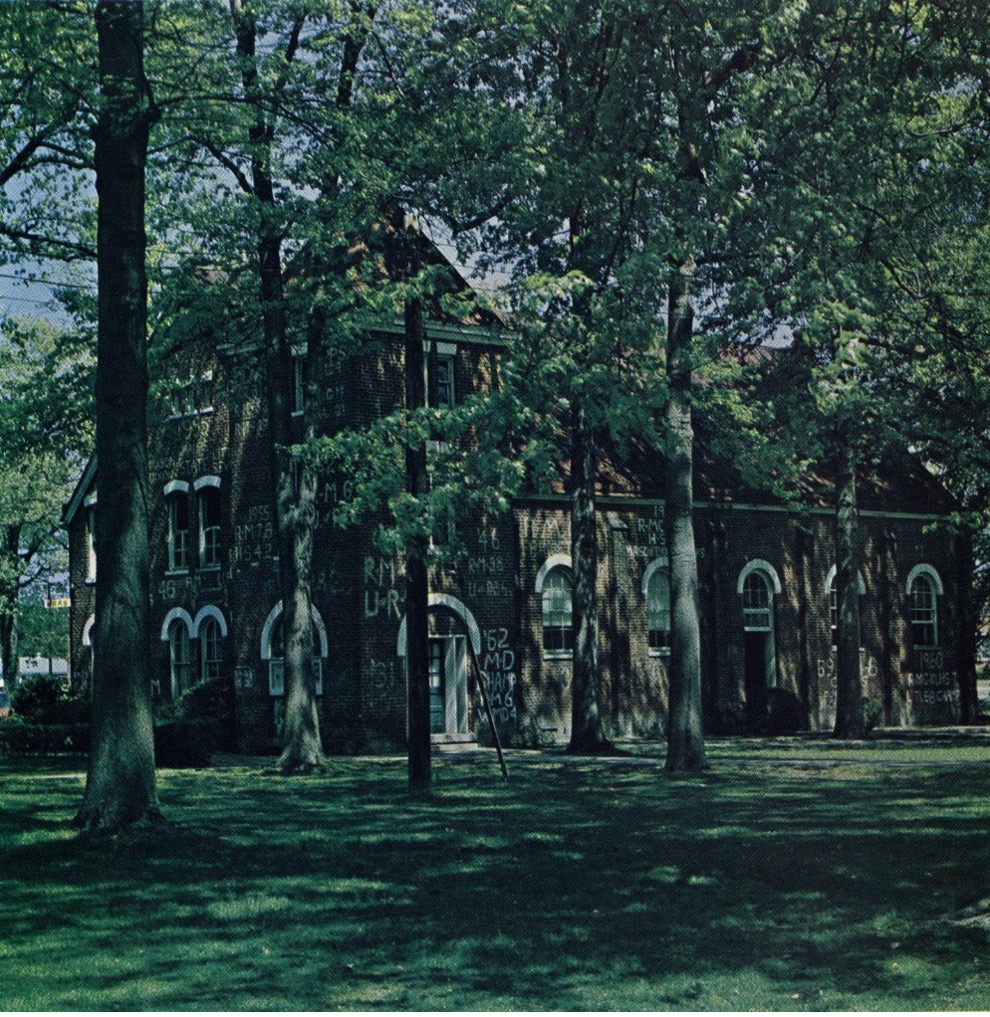
Cover picture, 196
Links to James H. Grant quotations:
https://www.ivy-style.com/ten-simple-rules-of-the-southern-collegiate-style.html
https://www.ivy-style.com/no-socks-in-sight-the-heyday-of-southern-collegiate-style.html
Are You A Preppie? Poster picture from following link:
https://www.instagram.com/p/C0jSBwSLwpz/
Photo of Preppy Handbook from following link:
https://www.nytimes.com/2019/08/05/arts/preppy-handbook.html
Preppy Handbook people photo from following link: